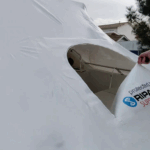
Rain, wind, humidity, UV rays…
Weather conditions represent a major risk for many sectors: construction, industry, marine, and logistics.
Too often underestimated, they can nevertheless lead to:
• equipment damage
• project delays
• significant additional costs
The good news? These losses are not inevitable.
With the right methods and equipment, it is possible to effectively secure your installations and significantly reduce the impact of weather conditions.
Weather conditions: an invisible but very real cost
On a construction site or during outdoor equipment storage, weather conditions can quickly become problematic.
Humidity and rain
• corrosion of metal parts
• deterioration of sensitive materials
• water infiltration into structures
Wind
• displacement or damage to protective coverings
• instability of installations
• safety risks
UV rays and heat
• premature aging of materials
• deformation or alteration of certain components
Result: direct financial losses (replacement, repair) and indirect losses (delays, labor, reputation).
How much do these losses really cost?
It is difficult to provide a universal figure, but the consequences are often underestimated:
• delivery delays
• equipment downtime
• unexpected corrective interventions
• non-compliance or loss of quality
On some projects, weather-related losses can amount to several thousand euros, or even more on complex sites, and are not always covered by insurance.
Anticipate rather than react
The key to reducing these losses lies in a simple approach:
protect in advance rather than repair afterward
This involves:
• identifying risk areas
• anticipating weather conditions
• implementing appropriate solutions
The solution: comprehensive and durable protection
To be effective, weather protection must meet several criteria:
• be waterproof
• withstand wind and mechanical stress
• provide UV protection
• adapt to various shapes and volumes
This is precisely what shrink wrap film provides.
Shrink wrap film: an effective barrier against the elements
Unlike traditional tarpaulins, shrink wrap film offers tailor-made protection.
Once heated, it perfectly conforms to the shape of the object or structure, creating a covering that is:
• airtight
• durable
• resistant
Its advantages:
– Protection against rain and humidity
– Excellent wind resistance
– Barrier against dust and dirt
– UV resistance (depending on the film type)
– Adaptability to complex shapes
Result: optimal protection, even in harsh conditions.
Practical applications
Shrink wrap film is used in many situations:
Construction
• building containment
• site protection
• temporary roofing
Industry
• outdoor equipment storage
• protection of sensitive machinery
• secure transportation
Marine
• boat winterization and transport
• protection against weather and UV exposure
In all these cases, the objective is the same: prevent damage and protect assets over time.
A quickly profitable investment
Implementing a protection solution may seem like an additional cost.
However, it is actually an investment that helps reduce:
• repair costs
• material losses
• delays and time loss
• risks
In many cases, protection helps avoid costs far greater than its initial price.
Best practices to maximize effectiveness
To fully benefit from weather protection:
• choose the right type of film (thickness, UV resistance…)
• ensure proper and uniform installation
• check sensitive points (edges, fixings)
• anticipate extreme conditions
Proper installation is just as important as material selection.
Towards better risk management
In a context where weather events are becoming increasingly frequent and intense, protecting equipment has become strategic.
Reducing weather-related losses means:
• securing operations
• optimizing costs
• improving project reliability
Conclusion
Weather conditions are unpredictable… but their consequences can be controlled.
By implementing appropriate protection solutions, such as shrink wrap film, it is possible to:
• limit damage
• avoid additional costs
• ensure operational continuity
Anticipate, protect, secure:
this is the key to turning risk into opportunity