How to Choose the Right Shrink Film to Protect Your Goods
Written by:
Updated on:
Reading time:
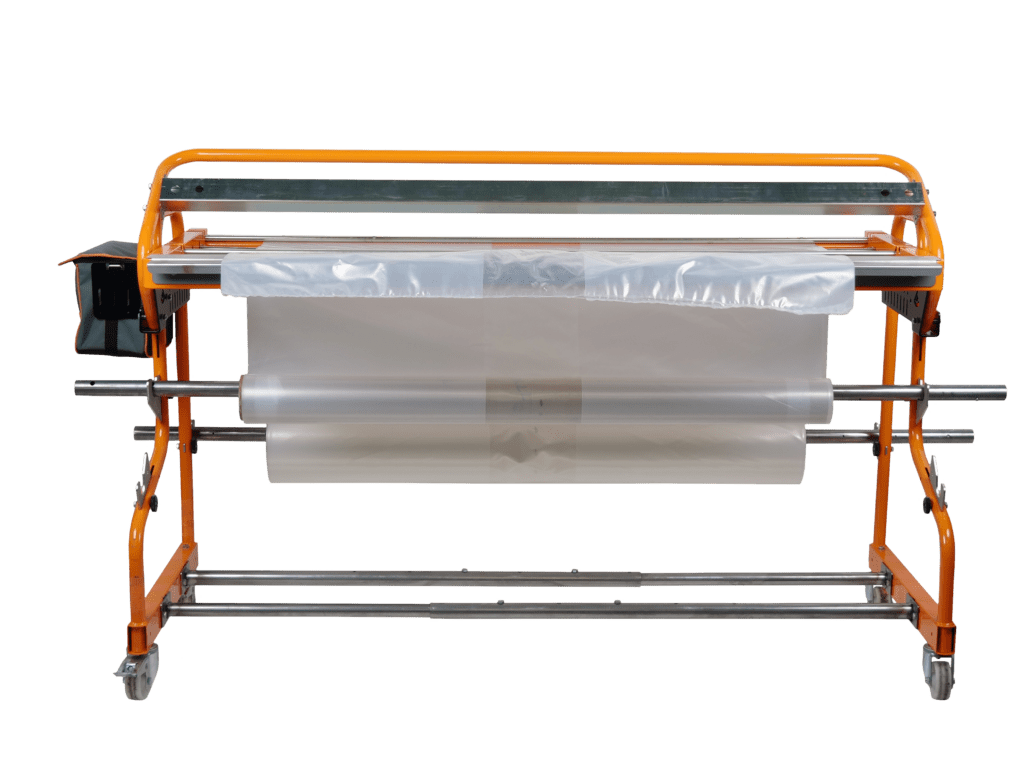
When it comes to protecting goods, industrial equipment or large structures, heat-shrink film is a particularly suitable solution. Once heated using shrink equipment, the film conforms to the shape of the item being protected, creating a strong protective covering against external conditions.
However, not every project has the same requirements. Dimensions, thickness, UV exposure, fire resistance and storage duration are all important factors to consider when choosing the right shrink film.
Identify how the shrink film will be used
The first step is to determine exactly what you need to protect and under what conditions.
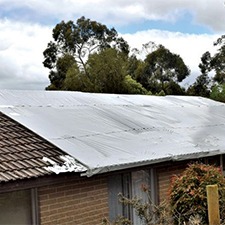
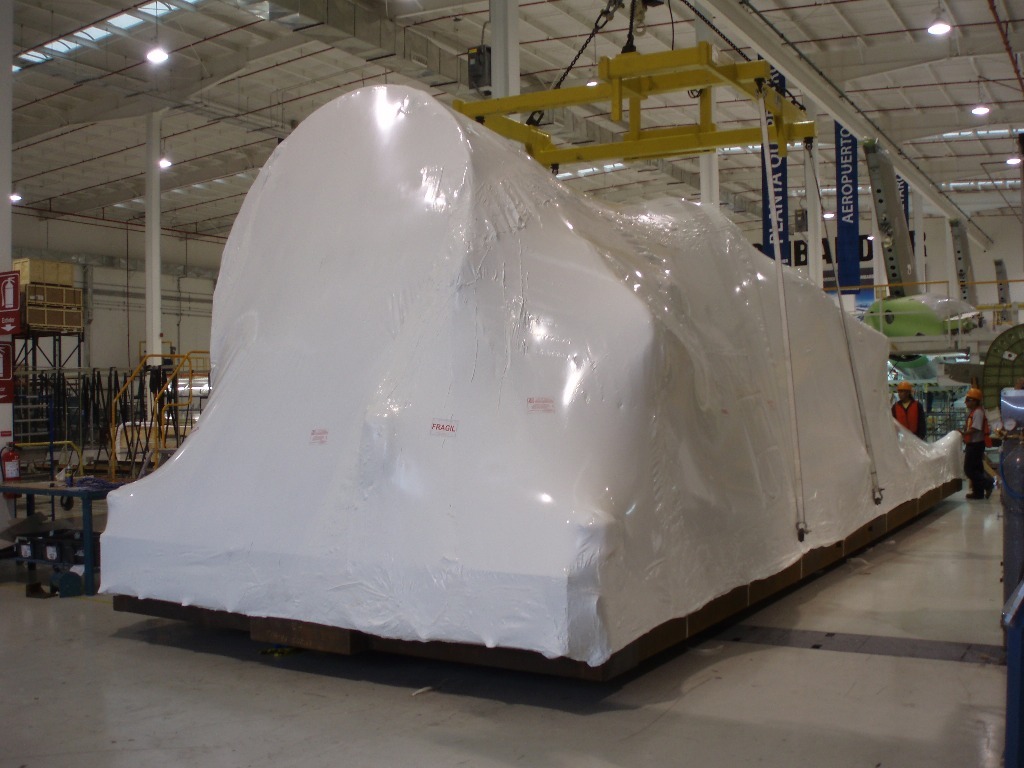
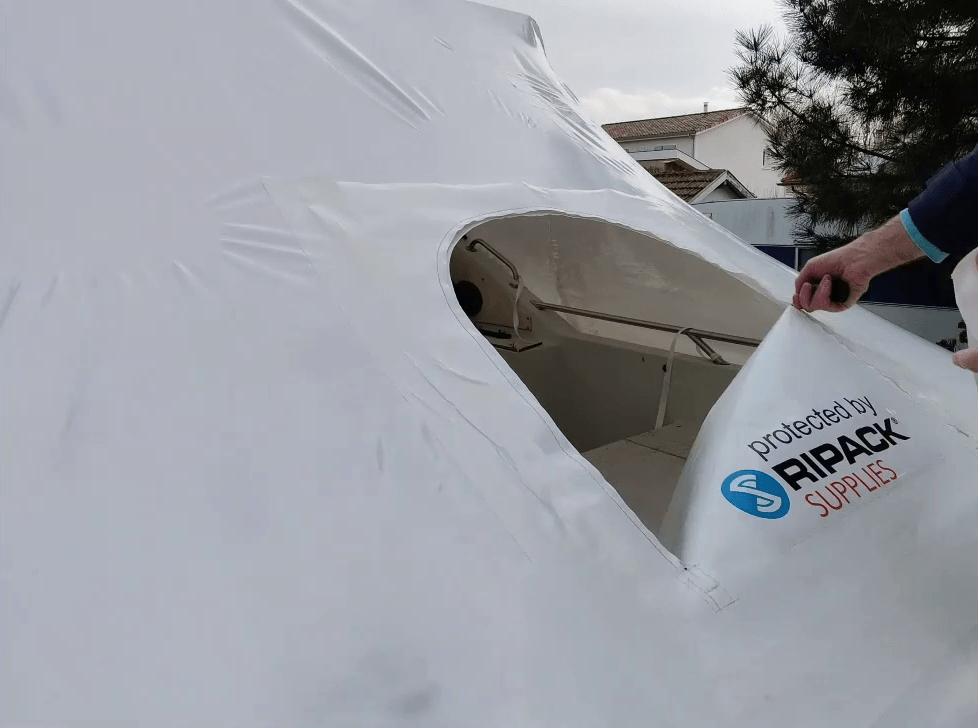
Heat-shrink film can be used for a wide range of professional applications: winter storage and protection of boats, containment of buildings and monuments, protection of industrial goods, aerospace equipment, and even oversized items.
The size and shape of the item are therefore essential considerations. A boat stored outdoors for several months will not necessarily have the same requirements as an industrial machine being transported or a building that needs to be contained during construction work.
You should also consider whether the protection will be installed indoors or outdoors, whether it will remain in place for a few weeks or several months, and what conditions it will be exposed to: wind, rain, dust, humidity, sunlight, etc.
Choose the right dimensions
To provide effective protection, the film must obviously be large enough to cover the entire item while remaining easy to install.
Ripack Supplies offers wide-width heat-shrink films in a range of dimensions:
• Widths: 4 to 15 metres
• Lengths: 30 to 50 metres
• Thicknesses: 180 to 300 microns
This variety makes it possible to meet the requirements of many different projects, including the protection of particularly large items.
The aim is not simply to choose the largest film available. Selecting dimensions suited to the size of the item being protected makes installation easier and reduces the number of joins and welds required. However, there is effectively no size limit, as multiple sheets of film can be welded together to provide effective protection for exceptionally large items.
What thickness of shrink film should you choose?
Thickness is one of the main selection criteria.
Ripack Supplies films are available in thicknesses ranging from 180 to 300 microns, with custom manufacturing available for thicknesses above 210 microns.
Your choice should take into account the size of the item, the conditions of use and the required level of protection.
Temporary protection in a relatively low-demand environment does not have the same requirements as construction site containment or industrial equipment stored outdoors for an extended period.
It is therefore not necessarily a question of choosing the thickest film available. The key is to select the thickness best suited to the application and the specific requirements of the project.
Take UV exposure into account
For outdoor storage or protection, UV exposure is an important factor to consider.
Ripack Supplies wide-width films are made from low-density polyethylene (LDPE) and feature UV stabilisation guaranteed for 12 months.
This feature is particularly useful for applications such as boat winterisation, outdoor storage of machinery and equipment, or certain containment projects.
Films with other specific properties are also available to adapt the protection to the different challenges encountered in the field.
Check fire resistance requirements
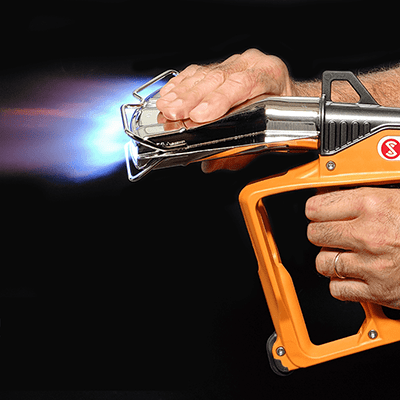
Please note: there is no size limit when shrink-wrapping. You can join as many sheets of film as required using your Ripack shrink gun.
On certain construction sites or in specific professional environments, the film’s reaction to fire can be a decisive factor.
Ripack Supplies therefore offers, on request, films with specific properties designed to meet these requirements. B-s1,d0 and M1 classifications are available depending on the thickness: from 190 to 300 microns for B-s1,d0 and from 200 to 300 microns for M1. These are referred to as fire- or heat-retardant films.
Before selecting your film, it is therefore important to check the applicable regulatory requirements or the specifications associated with your project.
Choose a film with uniform shrinkage
Dimensions and thickness are not the only factors that matter. The shrink quality of the film is also essential to achieve a properly tensioned protective covering around the item.
Ripack Supplies films feature bi-axial shrinkage, meaning that they shrink in both directions. This property provides greater flexibility during installation and makes it easier for the film to adapt to the different shapes of the items being protected. They are also designed to provide excellent weld strength.
Choosing a high-quality film therefore directly contributes to easier installation and greater durability of the protection.
The right shrink film depends above all on your project
There is no single universal heat-shrink film suitable for every situation. The right choice depends on a combination of factors: the dimensions of the item, the required film thickness, the environment, the duration of protection, UV exposure and any fire reaction requirements.
To simplify the selection process, Ripack Supplies offers a configurator that allows you to specify the required dimensions and thickness, as well as the accessories needed for installation: strapping, adhesive tapes, vents, cutters and zippered access doors.
Choosing the right solution and dimensions from the outset ensures protection suited to the project while also making installation easier for operators.
Not sure which shrink film is best suited to your application? Tell Ripack Supplies about your project to identify the solution that best meets your protection, storage or containment requirements.
Share this article

Vous vous posez peut-être ces questions ?
All our films are manufactured in compliance with the ISO 9001:2015 standard. B-s1,d0 and M1 certifications are available regardless of the requested length and width, for thicknesses ranging from 190 to 300 microns for B-s1,d0 and 200 to 300 microns for M1.
Sur le même thème

Need some information or have a question?
Our dedicated team will get back to you as soon as possible.